
Christchurch Park & Mansion – 1,000 years of Tranquillity
Christchurch Park takes its name from the 12th century Augustinian priory which once stood at its south-eastern corner and whose monks established the park and fish ponds. For centuries it was a verdant, but private sanctuary and deer park stretching northwards out of the town into open country. An ancient Anglo-saxon trackway led south through the middle of the park into the centre of the town. That trackway, now known as the Fonnereau way, still carries out that same function today as it has done for over a thousand years. Many of its ancient trees had witnessed such events as when Shakespeare’s troupe of strolling players performed for the visiting Queen Elizabeth I, but by the late Victorian period it stood on the edge of a rapidly modernising Ipswich, and its future was uncertain.
As a private park, its owners the Fonnereau family had permitted occasional public access, and it was on such a day in 1852 that the pioneer Ipswich photographer Robert Burrows took these images. The exact location is easily recognisable, and indeed a number of the trees seen in these pictures are still standing today.
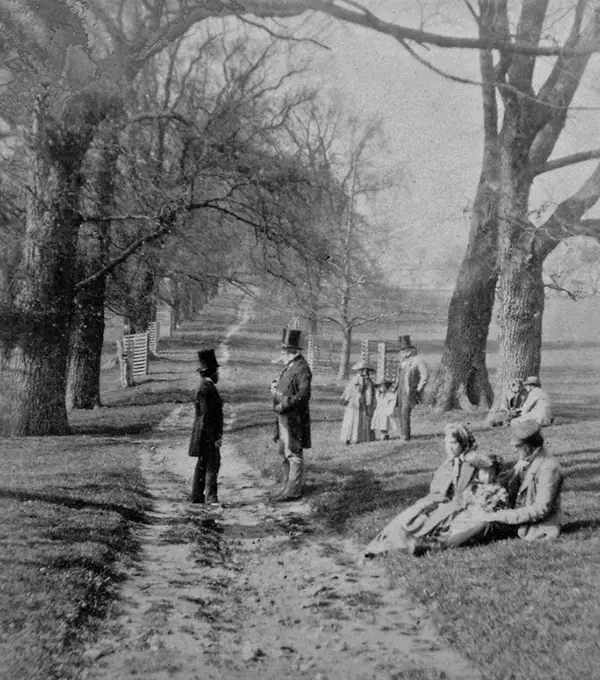
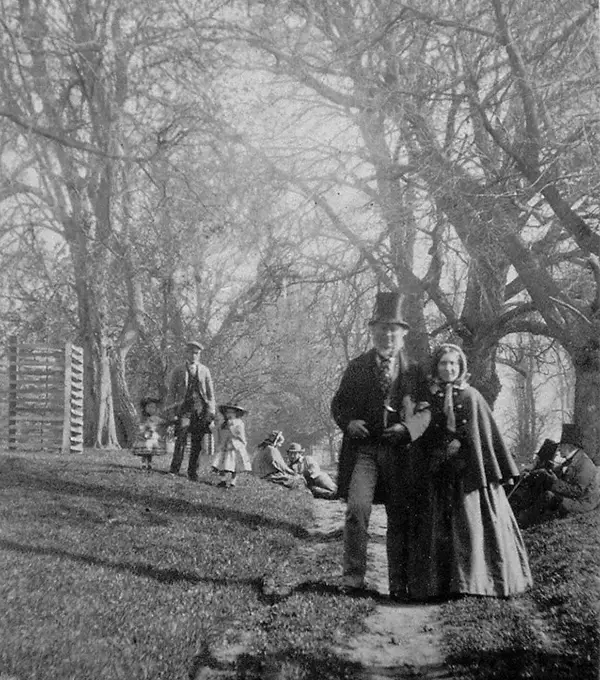
Through good fortune and the generosity of Felix Cobbold in 1895 it became a public park and place where nature, refinement, and quiet grandeur offered respite from the bustle of town life.
At its heart stood Christchurch Mansion, a splendid Tudor building that by the end of the 19th century had already witnessed centuries of change. Instead of its former life as a stately home, Cobbold’s gift meant that the Mansion could now become a fine public museum whose elegant interiors reflected both Elizabethan splendour and Victorian taste. Visitors wandered through its drawing rooms and galleries, admiring collections of fine art and furnishings that spoke to the town’s cultural aspirations.
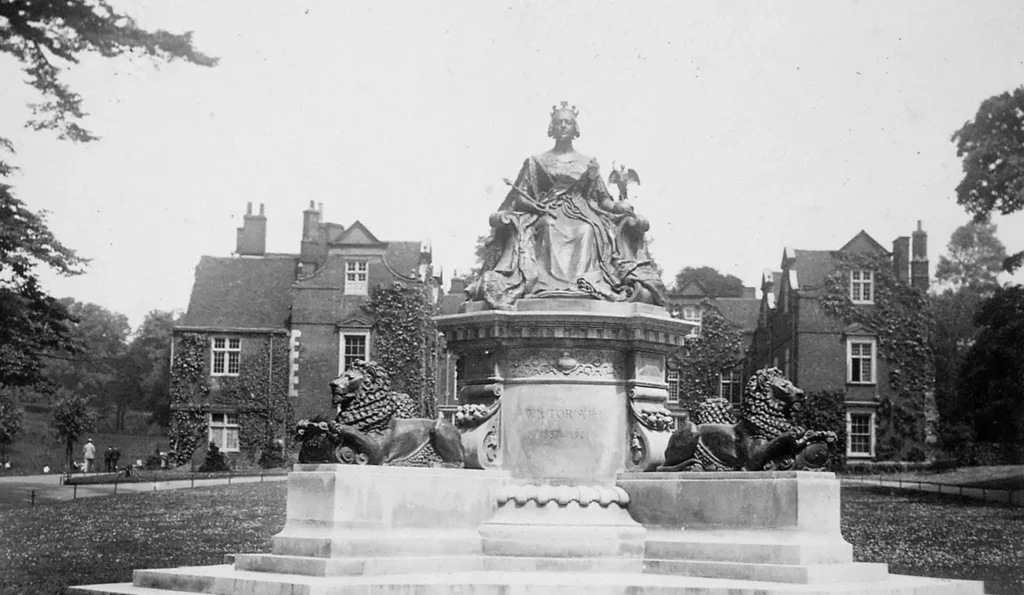
The park itself was a carefully curated landscape — a blend of formal gardens, statues, sweeping lawns and wooded glades. Victorian Ipswichians, dressed in their Sunday best, strolled along gravel paths beneath towering oaks and chestnuts. Children played with hoops and kites, while couples found quiet corners for conversation beneath wrought-iron gazebos and beside ornamental ponds. Bandstands hosted musical performances, and the grounds welcomed fêtes, exhibitions, and gatherings that brought the community together. It was here that Ipswich’s growing middle class could enjoy the ideals of Victorian life — refinement, recreation, and a connection to nature.
Christchurch Park was more than a place of leisure; it was a stage for civic pride and public celebration. As the new 20th century progressed, the park became increasingly accessible to the public, reflecting broader social changes. The Mansion, too, evolved as its role shifted from private residence to cultural landmark, eventually housing collections that celebrated Ipswich’s artistic and historical heritage.
Today, Christchurch Park and Mansion remain a cherished part of the town’s identity, rightly felt to be the jewels in Ipswich’s crown, but in the Victorian era their purchase was seen as a living expression of the town’s ambition, elegance, and enduring love of beauty.
The photographs for this article are reproduced courtesy of the Ipswich Maritime Trust Image Archive: Robert Burrows and Leonard Woolf Collections, sourced with permission from Suffolk Archives.
This content has been developed with generous time and expertise donations from a number of people whom we thank for their contributions. The author of the content is Stuart Grimwade
There are six binoculars in key historic locations around the town. You can find them all here
You can also download a map kindly curated by Historic Towns Trust on their 1904 map of Ipswich, showing the location of each set of binoculars and what the town around them used to look like.
Photographs from the Ipswich Maritime Trust’s Image Archive helped inform what you see and the content on this website.
Members of the Ipswich Maritime Trust, the Historic Towns Trust, the towns’ Tourist Guide Association and other wonderful members of the public shared their expertise on the history of Ipswich to help guide the designs and keep them accurate.
Our partners at Zubr have made the technology a reality and supported the project at every step, designing the first content themselves and ensuring these are a fantastic addition to Ipswich.
Kindly funded by the Ipswich Towns Fund



If you find anything wrong with our binoculars, please let Ipswich Borough Council know by clicking this link.
Please note the binoculars may be asleep when you approach, give them a wiggle to wake them up.
Brought to you by Ipswich Central, the Business Improvement District (BID) for the town centre and waterfront thanks to Ipswich Borough Council and Towns Deal funding.
The copyright of all content on this site, including images, belongs to Locus Management Solutions Ltd. Company registered in England.
Registration No: 5339846. Registered Office: The Master’s House, 19 Lower Brook Street, Ipswich, Suffolk IP4 1AQ.